Certification Standards for Random Number Generators in Roulette Applications Used by International Gaming Operators
Harper Griffin · Aug 25, 2026
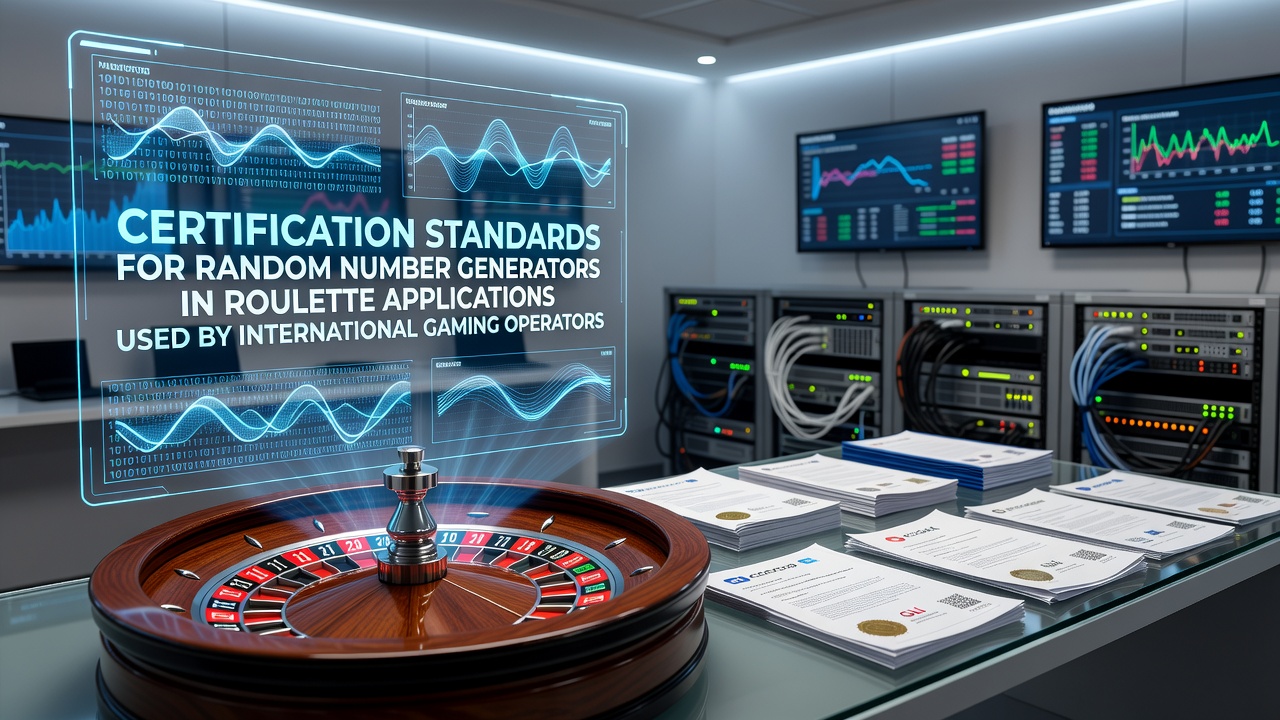
Certification Standards for Random Number Generators in Roulette Applications Used by International Gaming Operators
International gaming operators rely on certified random number generators to ensure roulette applications produce unpredictable outcomes across digital platforms, and these systems undergo rigorous evaluation before deployment in regulated markets. The certification process involves independent laboratories that verify statistical randomness through standardized test suites while operators must align with jurisdiction-specific requirements that vary by region and regulatory framework.
Experts note that core standards often reference ISO/IEC 17025 for laboratory competence along with gaming-specific protocols developed by organizations such as Gaming Laboratories International and BMM Testlabs. These evaluations examine sequence distribution, periodicity, and resistance to prediction models, and they require operators to submit source code plus hardware specifications for review. Data from regulatory filings shows that failures in initial testing frequently stem from inadequate entropy sources or implementation flaws in pseudorandom algorithms rather than fundamental design issues.
Regional Regulatory Frameworks and Compliance Pathways
Operators serving multiple continents must navigate distinct certification routes that reflect local priorities for player protection and system integrity. The Malta Gaming Authority maintains detailed technical standards that mandate third-party RNG audits every twelve months for remote gaming systems, and these rules apply directly to roulette titles hosted on Maltese-licensed platforms. Similarly, the Nevada Gaming Control Board enforces its own RNG testing criteria through approved labs, requiring continuous monitoring logs and re-certification following any software updates that affect outcome generation.
Those who manage international portfolios often coordinate simultaneous submissions to several authorities, because a single certification rarely satisfies every market. Australian state regulators, for instance, reference the National Standard for Electronic Gaming Machines when assessing RNG components in roulette applications, while Canadian provincial bodies such as the Alcohol and Gaming Commission of Ontario apply comparable statistical benchmarks. This patchwork creates administrative overhead yet ensures that deployed systems meet baseline fairness thresholds across jurisdictions.
Testing Methodologies and Technical Benchmarks
Certification laboratories apply batteries of statistical tests including the Diehard suite, NIST SP 800-22, and customized gaming-specific evaluations that measure long-sequence behavior and autocorrelation. Technicians generate millions of outcomes from the submitted RNG, then analyze results for uniformity, independence, and absence of bias before issuing formal reports. Observers note that modern roulette applications frequently combine hardware entropy collectors with deterministic algorithms to achieve the required unpredictability levels while maintaining performance on mobile and desktop clients.

Additional scrutiny focuses on implementation security, including protection against reverse-engineering and side-channel attacks that might compromise the random sequence. Research indicates that operators who integrate certified RNG modules early in development cycles encounter fewer delays during final approval stages, whereas retrofitting existing code often triggers extended re-testing periods. In August 2026 several regulators plan to roll out enhanced requirements for quantum-resistant algorithms adn expanded logging of entropy sources, reflecting ongoing evolution in both threat models and computational capabilities.
Industry Organizations and Ongoing Monitoring
Trade groups such as the European Gaming and Betting Association publish guidance that helps members interpret overlapping certification demands, while academic studies from institutions including the University of Nevada, Las Vegas examine long-term performance of certified systems in live environments. Continuous monitoring programs require operators to retain raw RNG output samples for independent verification, and any detected anomalies trigger immediate investigation and potential suspension of the affected game titles. Figures from regulatory reports reveal that the majority of certified roulette applications maintain compliance throughout their operational lifespan when proper change-management procedures are followed.
Those who handle multi-jurisdictional deployments emphasize documentation of every modification to RNG parameters because even minor configuration shifts can necessitate fresh certification. This documentation trail supports audit trails that regulators review during routine inspections or following player complaints about outcome patterns.
Conclusion
Certification standards for random number generators in international roulette applications continue to adapt as technology and regulatory expectations advance, requiring operators to maintain active relationships with approved testing facilities across different regions. The combination of statistical validation, security assessment, and periodic re-evaluation provides the foundation for consistent outcome integrity that players and regulators alike depend upon. As new protocols take effect in 2026, operators who track these developments closely position themselves to meet updated requirements without service interruptions.