The Influence of Regional Regulations on Roulette Variant Adaptations in App Development
Elena Peters · Aug 31, 2026

The Influence of Regional Regulations on Roulette Variant Adaptations in App Development
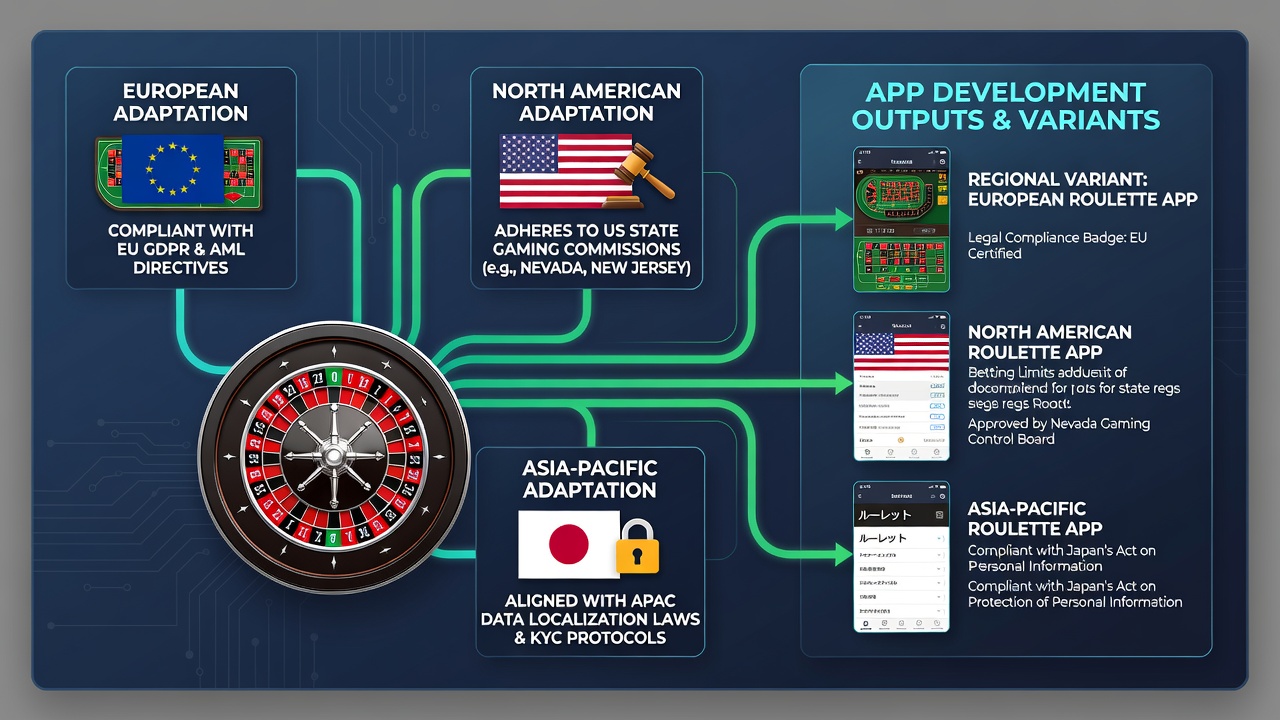
Regional regulations determine how developers modify roulette variants for mobile applications, since legal frameworks in different jurisdictions impose specific requirements on game mechanics, payout structures, and user interfaces that force adjustments to standard European, American, and French roulette formats.
Developers must alter wheel configurations, betting options, and animation sequences when regulations limit maximum stakes or require mandatory pauses between rounds, which leads to distinct app versions tailored for each market rather than a single global build.
Variations in Legal Frameworks Across Jurisdictions
European markets enforce strict rules on game transparency and player protection that require roulette apps to display real-time probability information and limit certain side bets, whereas North American state-level rules often focus on licensing criteria that affect how variants incorporate multi-wheel options or progressive jackpots. Australian regulations emphasize harm minimization features, which push developers to integrate session timers and loss-limit prompts directly into the gameplay flow of adapted roulette titles.
These differences create fragmented development pipelines, since teams working on a single app must branch code to accommodate each set of mandates while maintaining core random number generation consistency across versions. Observers note that such branching increases testing cycles and documentation demands, particularly when regulators request audit trails for every variant change.
Technical Adjustments Driven by Compliance Needs
App developers respond to regional mandates by redesigning interface elements, such as adding jurisdiction-specific responsible gaming overlays or modifying payout tables to reflect local tax calculations that alter displayed odds. In markets where regulations prohibit autoplay functions, teams remove those features from roulette variants and replace them with manual spin confirmations that satisfy oversight bodies without disrupting core gameplay rhythm.
Further adaptations appear in how apps handle currency conversions and bonus structures, since some regions cap promotional value or require clear separation between deposited funds and bonus credits in roulette sessions. Data from regulatory filings shows that these changes often extend development timelines by several months as teams iterate on user flows that meet both technical standards and legal thresholds.
Market-Specific Case Examples
One development team working on a multi-variant roulette platform adjusted the French roulette layout for a European release by incorporating en prison rules as a default toggle, because local statutes require that feature to remain active unless players explicitly disable it. In contrast, the same team created a separate build for certain Asian markets that emphasizes rapid round pacing and omits slower etiquette-based animations to align with shorter session expectations under local licensing conditions.
Canadian provincial frameworks have prompted similar shifts, where apps must log every bet placement and outcome for audit purposes, leading developers to embed detailed transaction histories within the roulette interface itself rather than keeping records in a separate menu. These examples illustrate how regulations translate into concrete code modifications that differentiate each regional release while preserving recognizable roulette mechanics.
Emerging Trends Through August 2026
By August 2026, several jurisdictions plan to update digital gaming directives that will further influence roulette variant adaptations, particularly around integration of identity verification tools and real-time spending trackers. Developers anticipate that these updates will require additional API connections to government databases, which in turn affects how apps switch between different roulette rule sets without interrupting active play sessions.
Industry reports indicate that companies already preparing modular code architectures expect smoother transitions when new rules take effect, since pre-built components can toggle compliance features on or off depending on detected user location. Such preparations reduce the risk of market access delays that previously occurred when regulations changed mid-development cycle.
Conclusion
Regional regulations continue to shape roulette variant adaptations in app development by dictating specific mechanical, interface, and reporting requirements that vary widely across markets. Developers maintain multiple code branches and testing protocols to ensure each version satisfies local standards while delivering consistent core gameplay. As regulatory updates approach in 2026, teams that adopt flexible architectures position themselves to implement required changes efficiently across European, North American, and Asia-Pacific releases.